
Notifications
Charl Botha Jun 15 5 minutes, 4 seconds
434 views 0 Comments 1 Like 0 Reviews
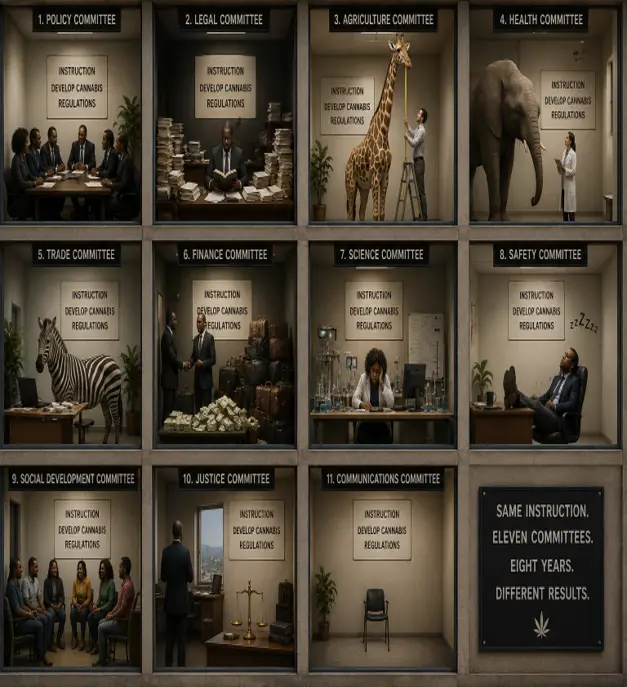
The Eleven Departments Problem: When Coordination Becomes the Excuse
By Charl Botha B.Prc (S.A) H3 Legal Solutions Pty Ltd / Healthpath24
Government frequently explains delays in cannabis reform by pointing to the challenge of coordinating eleven departments. At the outset, that explanation carried credibility. Large-scale reform is rarely straightforward, and processes involving multiple departments are seldom fast.
Eight years later, the explanation carries far less weight.
South Africans measure government by outcomes rather than organisational structures. Eight years have produced consultations, workshops, policy discussions, task teams, strategy documents, and interdepartmental committees. Yet many of the practical questions facing farmers, businesses, communities, and consumers remain unanswered.
Regulatory certainty remains elusive. Hemp seed registrations continue to face constraints. Standards development has progressed slowly. Commercial pathways remain undefined. Businesses, farmers, and communities continue to operate in an environment shaped more by uncertainty than clarity.
The challenge ceased being coordination years ago. Constitutional rights do not pause while departments exchange memoranda, establish working groups, schedule consultations, and circulate draft frameworks. Rights recognised by the courts carry an expectation of implementation. Citizens seeking clarity from government carry the same expectation.
Over the past eight years, meetings, roadmaps, strategies, and consultations have accumulated while the sector has continued to evolve independently.
This raises a straightforward question: in a process involving eleven departments, where does responsibility ultimately reside?
Which department carries the mandate to drive progress? Which department accounts for delays? Who answers when deadlines pass, opportunities are lost, and investment moves elsewhere?
Process serves a purpose. Accountability serves a greater one.After eight years, the public deserves more than an explanation. The public deserves a clear account of responsibility.
Time for Accountability
Policy development takes time. Complex issues require debate, and governments must often balance competing priorities.
Progress, however, remains the measure against which those processes are judged.
Eight years have passed since the Constitutional Court delivered its judgment. During that period, the public has witnessed consultations, policy discussions, working groups, draft frameworks, and repeated assurances that progress remains underway. Yet the destination remains difficult to identify.
What makes this situation unusual is that the cannabis sector has continued to develop regardless.
While officials drafted policies and attended consultations, farmers planted crops, businesses opened their doors, and consumers exercised rights recognised by the courts. The industry did not wait for permission to exist.
Government now faces the challenge of regulating a sector that developed during the regulatory process itself.
Who carries responsibility for eight years of delay? Who accounts for missed commitments, abandoned timelines, and wasted public resources? Which department answers for opportunities lost while government continues its search for consensus?
The industry exists. The market exists. The public has moved forward.
The remaining question is whether government intends to catch up.
Eight years is a significant period in any commercial environment.
A company can be established, expanded, and sold within that timeframe. A child entering Grade 1 in 2018 is now preparing for high school. An entire generation of entrepreneurs has attempted to build businesses while government continues to define its position on an industry already operating in plain sight.
The most concerning aspect is the absence of a clear endpoint.
After eight years, South Africans continue to hear about consultations, coordination, and ongoing discussions. The terminology changes. The outcome rarely does.
A process without defined milestones, timelines, or accountability mechanisms inevitably raises concerns about whether delay has become embedded in the process itself.
The time for accountability has arrived.
Charl Botha (B.Proc) is a legal strategist, cannabis policy specialist, and co-founder of H3 Legal Solutions (Pty) Ltd. He has briefed Parliament on cannabis policy and industrialisation matters in South Africa.





Share this page with your family and friends.