
Notifications
Charl Botha Jun 22 7 minutes, 11 seconds
174 views 0 Comments 0 Likes 0 Reviews
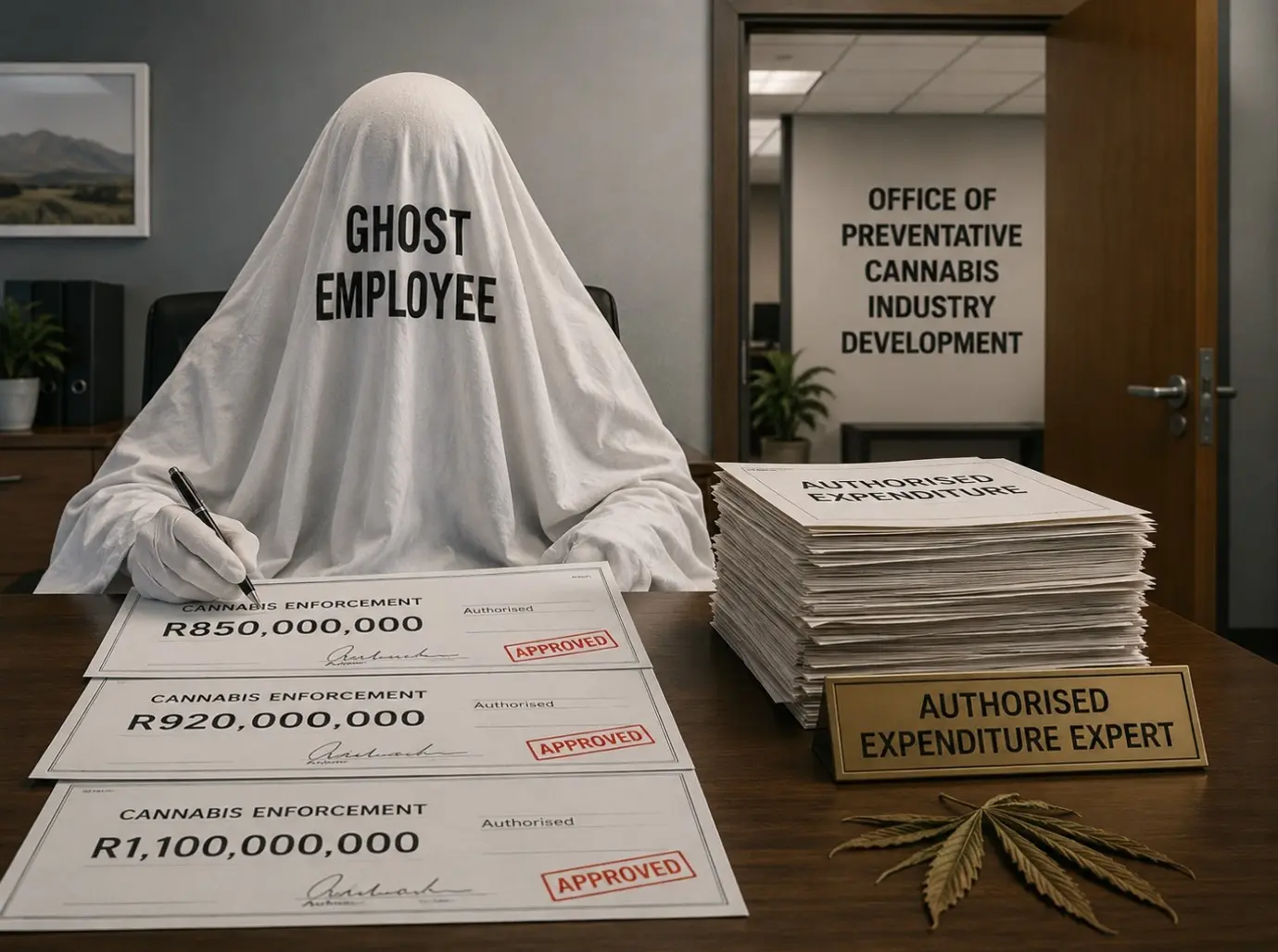
The Financial Cost of Failure: Who Is Authorising the Continued Delay in Cannabis Reform?
By Charl Botha | H3 Legal Solutions
Eight years after the Constitutional Court provided clear guidance, South Africa still does not have a coherent cannabis framework. Government has produced master plans, policy discussions, stakeholder engagements, investment conferences, public consultations and repeated promises that cannabis would become a driver of rural development, job creation and economic growth. Yet the practical systems needed to turn that recognition into lawful, taxable economic activity remain largely absent.
What government rarely discusses is the real cost of this prolonged delay.
For decades the state has spent public money enforcing cannabis prohibition. Police resources, court proceedings, prosecutions, investigations, seizures, regulatory processes and administrative programmes have all carried a direct cost to the taxpayer. There has never been a transparent public accounting of what this policy has cost the fiscus or what measurable return it has achieved. This raises a fundamental question: who is authorising the continued expenditure of public resources on a system that has failed to achieve either effective prohibition or meaningful regulation?
The cannabis industry already exists across South Africa. Stores trade openly in many areas, products are widely available, and consumers no longer behave as though they are participating in a prohibited activity. If the objective was prohibition, the policy has clearly failed. If the objective was regulation, that policy has yet to arrive. Taxpayers therefore find themselves funding a system trapped between two unsuccessful outcomes.
The Double Burden on Public Finances
The cost is not abstract. SAPS resources, already under severe strain, continue to be deployed to police what is largely a regulatory vacuum rather than clear criminal activity. Magistrates’ courts, badly backlogged, spend valuable time on low-level cannabis matters that would largely disappear under a clear lawful framework. Each such case carries direct costs in police time, transportation, detention, prosecution and court appearances, often followed by constitutional litigation and civil claims against the state.
At the same time, SAHPRA-licensed facilities have invested millions of rand in compliant infrastructure, cultivation and processing capacity, only to face no reliable access to the local market and almost no government support to enter the export market. The current lack of a coherent legal framework is effectively driving South African cannabis exports into the ground while international competitors benefit from our inaction.
Government estimates have placed the potential value of a properly regulated cannabis sector in the region of R28 billion or more. Every year of delay means substantial lost VAT, income tax, licence fees and excise revenue, as well as forgone rural jobs, deepening poverty in traditional production areas, rising public health risks from unregulated products, and mounting legal claims against the state.
Opportunity Costs Mount
The broader economic damage is significant. Investment that should have flowed into South Africa is going elsewhere. Jobs that could have been created in cultivation, processing, testing, packaging and logistics never materialise. Rural communities promised transformation continue to wait. Small businesses struggle to attract funding or participate in a market trapped between constitutional rights and regulatory uncertainty. Every year spent debating what should happen is another year in which competing countries advance their own industries, attract investment and capture market share.
Time for Accountability
The question that must now be answered by those responsible for policy is straightforward: who is authorising the continued cost of failure?
After eight years of promises, consultations and public resources spent, South Africans are entitled to know how much this delay has already cost the public purse and what measurable benefit has been achieved. The public has a right to expect transparency on the annual cost of cannabis enforcement across SAPS, the National Prosecuting Authority, forensic laboratories, the courts and correctional services. They also deserve clarity on why SAHPRA-licensed operators who invested millions are left without meaningful market access or export support.
South Africa does not need uncontrolled deregulation. The lessons from other countries where rapid or poorly managed liberalisation occurred are real. What the country needs is coherent, practical regulation that respects constitutional rights while protecting public health and enabling lawful participation.
A 100-Site Lawful Participation Pilot, already submitted to Parliament and relevant departments, offers a ready-made, low-risk mechanism to test tiered pathways, gather real data, protect public health, and demonstrate measurable progress on inclusion and economic participation.
Eight years is long enough. The industry already exists in practice. The question is no longer whether reform will happen, but who will be held accountable for the money already spent and the opportunities that continue to be lost while government fails to deliver a functioning framework.
Recognition without infrastructure is not reform. It is a structural liability South Africa can no longer afford, financially or socially.
Charl Botha is a South African legal and compliance strategist with extensive experience in criminal law, labour law, commercial law, litigation support, contract drafting and regulatory risk analysis. Through H3 Legal Solutions, he focuses on developing legally defensible governance, compliance and operational frameworks for complex and high-risk sectors, including South Africa’s emerging cannabis industry. His work combines legal reasoning, practical risk management and structured documentation to support lawful participation, accountability and institutional integrity.





Share this page with your family and friends.