The Contradiction at the Heart of Cannabis Reform
By Charl Botha | H3 Legal Solutions
South Africa’s cannabis policy rests on a fundamental contradiction that government has never properly explained.
On one hand, adults have a constitutional right to possess and cultivate cannabis for private use. On the other, the state continues to block or delay the commercial pathways that would allow ordinary citizens to lawfully obtain seeds, plants, and finished products.
This is not a minor policy gap. It is the central flaw in the current approach. You cannot sustainably recognise a right to possess something while simultaneously making it practically impossible for most people to acquire it through lawful channels. The result is a legal vacuum between constitutional promise and everyday reality.
That vacuum does not stay empty. It is filled by informal markets, unregulated supply chains, and persistent legal uncertainty. Government regularly talks about fighting the illicit trade. Yet the same policy actively prevents the development of lawful alternatives. This raises a straightforward question: how can the state claim to oppose illicit markets while systematically blocking the creation of regulated ones?
Rights without practical access are not real rights for most people
A person may have the constitutional right to cultivate cannabis, but not everyone has land, water, security, knowledge, or the physical capacity to do so safely and consistently. A person may have the right to possess cannabis, but if government delays lawful commercial channels, that right becomes theoretical for the vast majority of citizens.
The consequence is entirely predictable. Consumers turn to whatever is available. Businesses operate in a grey zone. Law enforcement is forced to police the messy boundary between recognised rights and an incomplete regulatory framework. This situation also creates space for those offering paid protection in the informal economy.
The contradiction goes deeper. Constitutional rights exist. Commercial regulation remains incomplete. Enforcement continues. Government cannot indefinitely treat private use and commercial supply as completely separate issues. Every agricultural product and every regulated consumer good depends on supply chains. Cannabis is no exception.
The longer the delay, the harder it becomes to justify enforcement
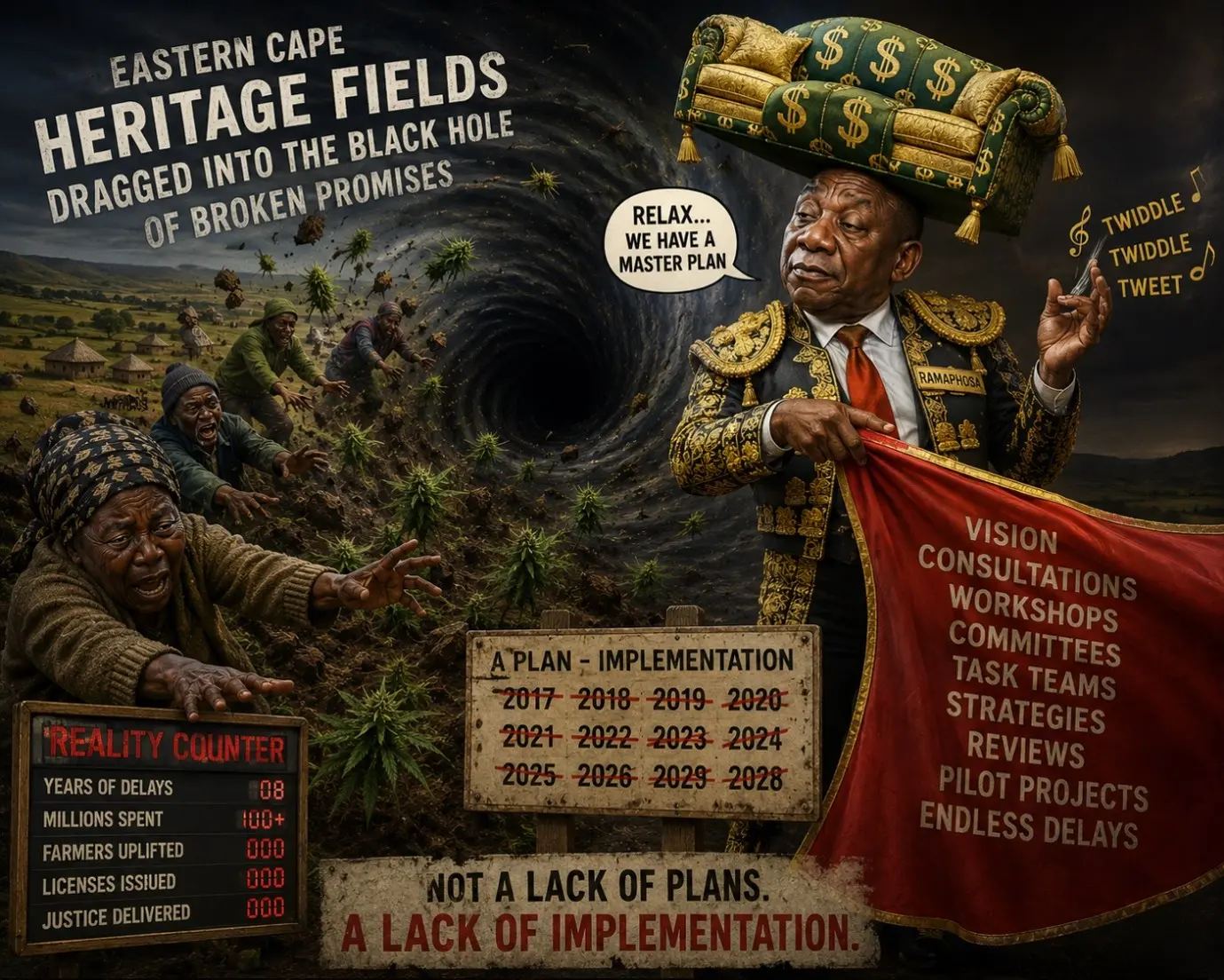
Every year that passes without a workable lawful framework makes it more difficult to defend enforcement actions against people trying to fill the gap that policy itself created. Farmers, small operators and legacy participants are left in limbo. Investors who complied with licensing requirements find themselves holding compliant facilities with no reliable route to market. Consumers who want to stay within the law have few options.
This is not sustainable. Rights without access are not certainty. They are promises waiting for implementation.
South Africa needs a coherent framework that respects the constitutional right to private use while creating regulated, accountable pathways for commercial activity. That means clear rules for seeds and genetics, testing capacity that actually works, licensing that does not strangle small players, and proper coordination between the departments responsible for agriculture, health, trade, justice and small business development.
Until government answers the basic question — if adults have the right to possess and use cannabis, where does it expect them to obtain it lawfully? — cannabis policy will remain trapped in its own contradiction.
The current approach recognises demand while refusing to build supply. That is not reform. It is a structural liability that South Africa can no longer afford.
 By Charl Botha



Share this page with your family and friends.